For corporate marketing managers and event planners, data privacy is no longer just a legal footnote, it is a strict operational constraint. Tightening compliance policies mean enterprise legal teams are handing out stressful ultimatums to prove explicit attendee consent for marketing images. Yet, forcing a media crew to stop and demand signed model releases from hundreds of executives completely destroys the organic flow and networking energy of a fast-moving program.
Having managed corporate media pipelines across Metro Vancouver for over 15 years, we know protecting your organization from a privacy crisis doesn't mean sacrificing your asset gallery. You can easily satisfy your legal department and respect attendee boundaries while still securing the high-yield assets your marketing engine needs. Here is your definitive, operational blueprint to running a fully compliant, photo-safe B2B event.
Part 1: The Legal Foundation (Before Doors Open)
Compliance begins at the moment of registration. Trying to fix a privacy issue after an image has been posted to LinkedIn is a losing battle. You must establish a clear legal framework upfront.
The Ticketing Checkbox (Explicit Consent)
Do not rely on a generic, hidden terms-and-service page. Your online registration portal must feature an explicit, active toggle or checkbox regarding media capture.
- The Blueprint: Use clear, unambiguous text: “By registering for this event, I acknowledge that photography and video recording will occur, and I grant the organization permission to use these assets for promotional and marketing purposes.”
- The Operational Split: Your registration database must output a clean list tagging exactly who checked "No" so your registration staff are prepared the morning of day one.
On-Site Crowd Release Signage
Legally, you must give fair warning to anyone entering a recorded environment.
- The Blueprint: Place a beautifully designed, high-visibility Crowd Release Notice sign directly at the main entrance gateways and registration desks.
- The Text: The sign should read: “Notice of Photography and Audio/Video Recording. By entering these premises, you are entering an area where photography, audio, and video recording will occur...” This provides your organization with a baseline layer of implied consent for general crowd shots.
Part 2: 4 Real-World Attendee Opt-Out Strategies
Once an attendee requests to opt out of media coverage, you need a visual shorthand that a photographer can instantly spot from 20 feet away through a telephoto lens. Here are four highly effective, non-disruptive strategies to execute on the floor:
Strategy 1: The Color-Coded Lanyard System
This is the gold standard for high-volume corporate conferences.
- How it works: When delegates check in at registration, those who consented receive the standard event lanyard (e.g., navy blue or black). Those who opted out are handed a distinctly bright, contrasting color lanyard (e.g., solid neon red or high-visibility yellow).
- The Pro Tip: Ensure your registration staff explicitly briefs the attendee: “This red lanyard tells our media crew to keep you out of close-up frames. Please keep it visible throughout the day.”
Strategy 2: The Neon Badge Sticker / Dot System
If your organization has already ordered thousands of custom-branded lanyards and cannot swap the colors, the sticker system is your best alternative.
- How it works: Keep a sheet of bright, reflective neon orange or hot pink circular stickers at the registration desk. If an attendee opts out, place a sticker directly onto the front and back of their plastic badge holder.
- Why it works: It preserves your branded lanyards while giving the media team a distinct, graphic focal point to look for before pressing the shutter button.
Strategy 3: Dedicated "Media-Free" Seating Zones
In a main plenary ballroom, tracking moving lanyards in the dark is a nightmare for a photographer.
- How it works: Designate a specific, clearly marked section of the ballroom—typically the back left or back right quadrant—as a Strictly Camera-Free Seating Zone.
- Why it works: Inform your media team that they are entirely restricted from shooting angles that capture that specific quadrant. Attendees who wish to remain completely off the grid can sit there with total peace of mind.
Strategy 4: The Evening Gala Wristband Pivot
Here is a major logistical blindspot most planners miss: during evening cocktail mixers and black-tie gala dinners, attendees take off their lanyards and stow them into pockets or purses.
- How it works: For evening hospitality tracks, transition your opt-out system to a simple, clean silicone wristband (e.g., a bright red band).
- Why it works: It blends naturally into a party or networking environment, remains visible on the arm holding a cocktail or shaking hands, and ensures your compliance protocols stay active after dark.
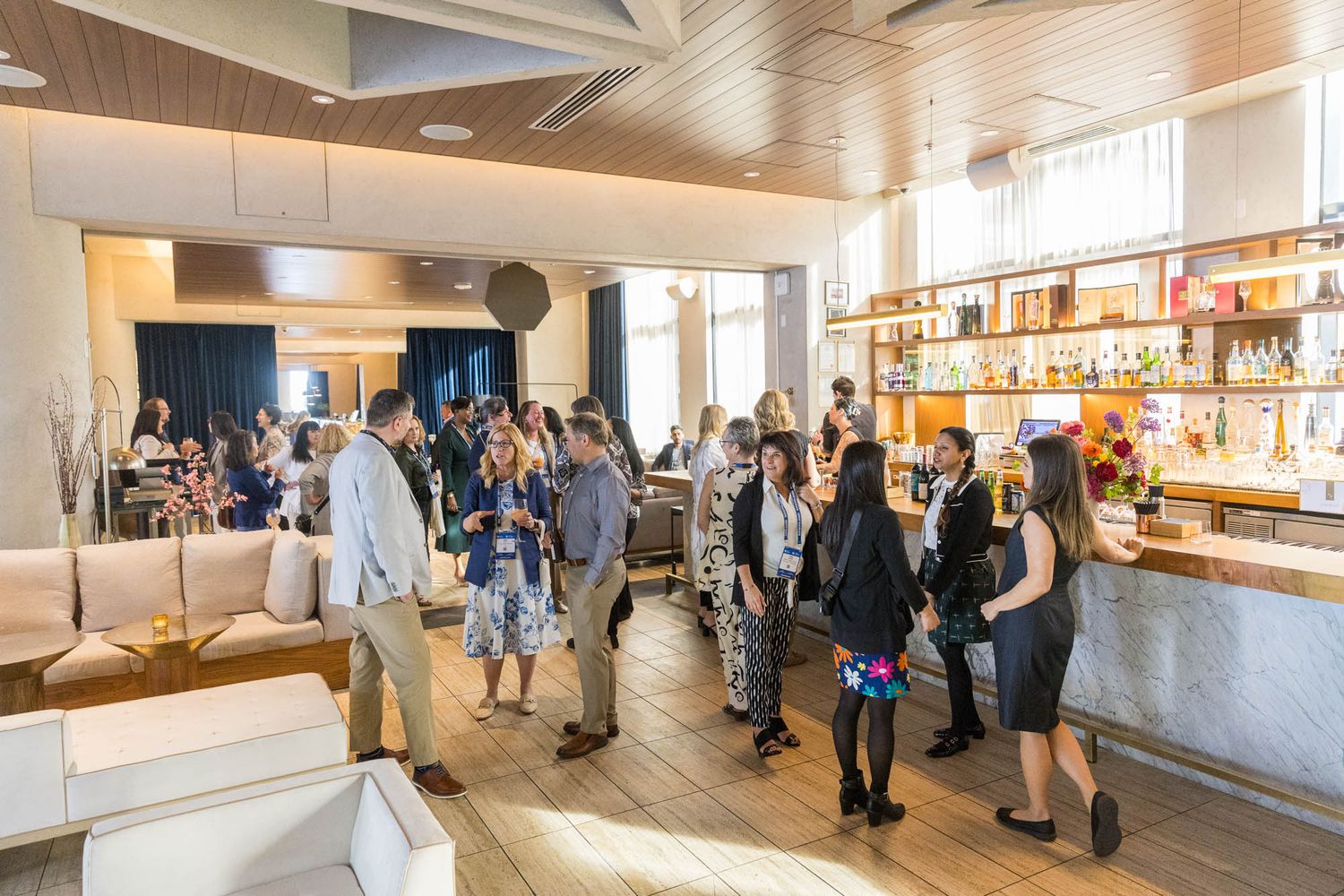
Part 3: Briefing Your Media Team For Success
The final piece of the compliance puzzle is vendor alignment. A premium Vancouver event photographer functions as an extension of your internal risk management team. Before a crew steps onto the trade show floor, your media brief must explicitly state the execution protocols:
- The Active Avoidance Rule: Your media team must actively scan the foreground and background of every composition for the designated opt-out signal (red lanyard, neon sticker, or wristband). If a signal is detected, they re-frame the shot entirely.
- The Post-Processing Filter: Despite best efforts on a fast floor, an opt-out attendee may occasionally walk into the background of a wide crowd shot. Your media team must run a secondary, manual compliance sweep during the editing and culling phase, applying a digital crop or removing any frames where an opted-out individual is clearly identifiable.
- The "Immediate Deletion" Protocol: Teach your on-site staff that if an attendee approaches a photographer on the floor and asks, "Hey, did you just take my picture? I'd prefer not to be in the gallery," the photographer should immediately display their camera screen, show the user the frame, delete it right in front of them with a smile, and thank them for clarifying.
Build a Seamless, Low-Risk Event Media Pipeline
Balancing legal safety with premium marketing design doesn't have to be a logistical headache. When you partner with our professional corporate media team, we deploy these exact B2B compliance and room etiquette protocols automatically. We ensure your legal department gets total risk mitigation, your attendees walk away completely respected, and your marketing managers get a high-yield, premium gallery ready to scale brand momentum.
Planning a high-stakes corporate function or national summit in Metro Vancouver? Explore our dedicated Vancouver event photography services page and secure a media partner who understands enterprise operations from the registration desk to the final gallery delivery.